
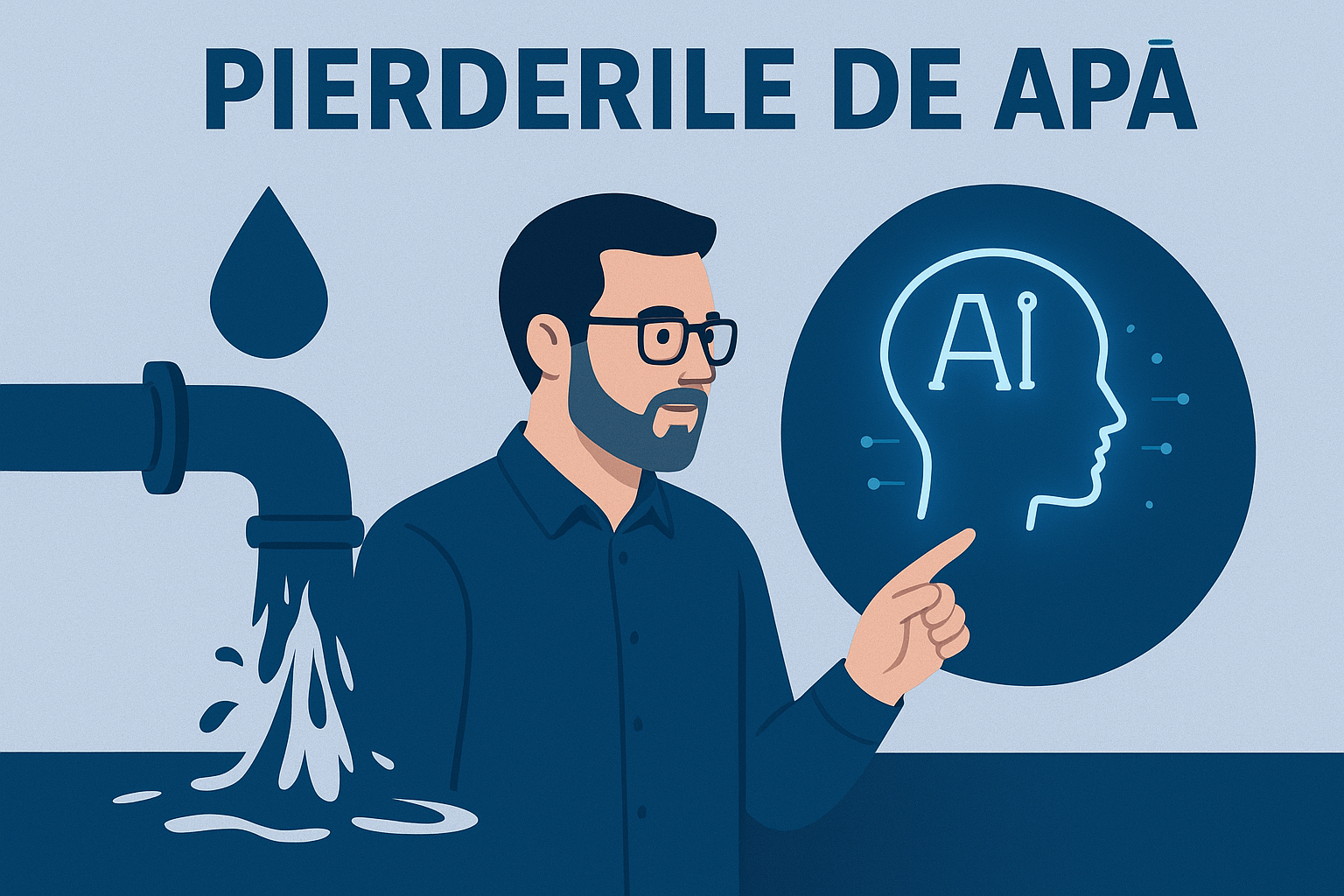
In a sector where uncertainty has become the new normal—aging infrastructure, climate pressure, growing consumption, staff shortages, and budget constraints—resilience is no longer optional. It is a strategic necessity.
From Reactive to Proactive
For decades, water loss management has functioned reactively: we intervene when something breaks, when consumers complain, when flows suddenly spike.
But the future belongs to those who can react before problems appear—those who transform data, technology, and field experience into anticipatory strategies.
Technology, Data, and Human Talent
Technology alone does not solve water losses.
Data without interpretation is noise.
And people without the right tools become overwhelmed.
When these three elements work together, they create scalable, efficient, and sustainable solutions:
-
sensors and loggers that provide continuous visibility,
-
hydraulic models that understand system behavior,
-
AI algorithms capable of learning patterns,
-
and specialists who can translate all these insights into field actions.
Real Partnerships—Beyond Contracts
True collaboration in this industry goes far beyond signatures and invoices.
Real partnerships mean shared responsibility, transparency, continuity, and the courage to say honestly:
-
This works.
-
This doesn’t.
-
This must change.
-
And this is how we can achieve real results.
Overcoming Operational Barriers
Operational barriers—slow procedures, fragmented teams, outdated tools—can be dismantled only through consistency.
Trust is not built through presentations, but through everyday work, through clear data, and through interventions that actually reduce the minimum night flow.
A Grounded Reality in a Fast-Moving Industry
While innovation promises everything overnight, the reality in the field is very different.
Pipes break. Networks behave unpredictably. Districts fluctuate.
The challenge is not to promise miracles, but to transform potential into measurable outcomes.
A Proposal for the Future: AI as a True Operational Partner
We are approaching a moment where AI will no longer be a concept, but an operational colleague.
I propose the development of an AI partner capable of:
-
receiving real-time data from sensors in the field,
-
generating virtual DMAs based on hydraulic behavior,
-
correlating noise levels, pressure drops, and flow anomalies,
-
and providing rapid insights that shorten the time between leak occurs and leak located.
This system will not replace people—but it will amplify their decisions and accelerate their work.


Leave A Comment